In Southwest Florida, algae and mildew aren’t just cosmetic issues; they’re a near inevitability. High humidity, frequent rain, warm temperatures, and shaded rooflines create the perfect environment for organic growth, especially on clay and concrete tile roofs. While many homeowners notice dark streaks or green patches and want them gone quickly, improper cleaning methods can cause serious and expensive roof damage.
At Bedrock Roofing, we regularly inspect and repair tile roofs affected by mildew on roof surfaces and algae buildup. Knowing how to treat these issues safely is essential for protecting both your roof’s appearance and its long-term performance.
This guide explains how roof algae treatment should be approached on tile roofs, and what to avoid, so you can keep your roof clean without compromising it.
Why Algae and Mildew Grow on Tile Roofs
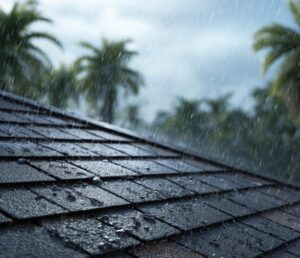
Tile roofs are extremely durable, but their porous surfaces make them more susceptible to organic growth in humid climates.
Common contributors include:
- Persistent moisture from rain and humidity
- Shade from trees or nearby structures
- Warm temperatures year-round
- Limited airflow across the roof surface
Mildew on roof tiles often appears as dark streaks, blotches, or greenish patches. While similar discoloration can also appear as mildew on roof shingles, tile roofs require different care methods due to their weight, shape, and surface composition.
Why Improper Cleaning Causes Damage
One of the biggest mistakes homeowners make is using aggressive cleaning methods. Tile roofs are strong, but they are not immune to breakage.
Avoid these damaging approaches:
- High-pressure power washing
- Harsh chemical cleaners are not designed for roofing
- Walking directly on unsupported tiles
- Scrubbing with abrasive brushes
Pressure washing, in particular, can crack tiles, dislodge fasteners, and strip away protective finishes. All of the damage may not be immediately noticeable, but can lead to leaks months later.
The Safe Way to Treat Algae and Mildew on Tile Roofs
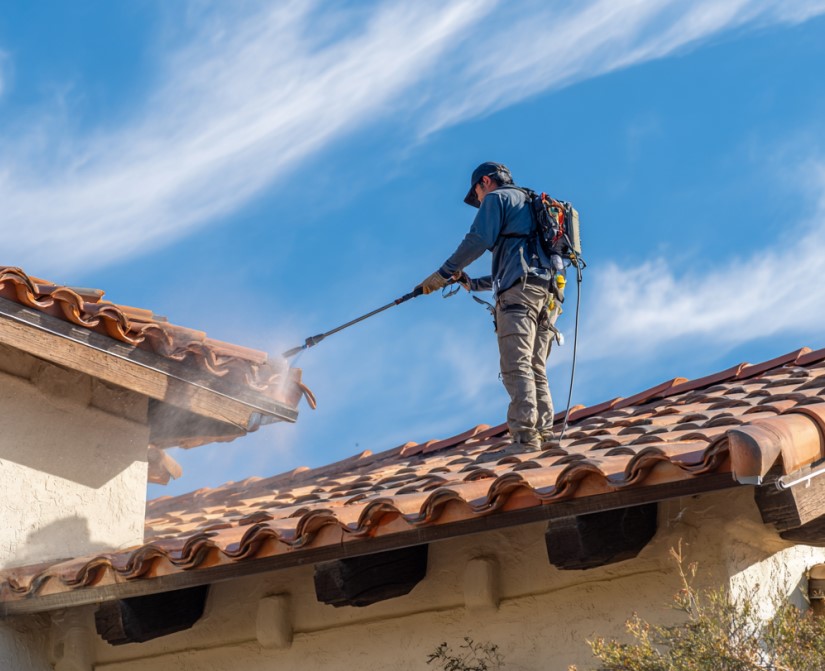
Professional roof algae treatment focuses on low-impact methods that remove growth without stressing the roofing system.
Step 1: Gentle Cleaning Solutions
Tile roofs should be cleaned using manufacturer-approved, low-pressure cleaning solutions designed to break down algae and mildew. These solutions work gradually, loosening organic growth without force.
Step 2: Low-Pressure Rinsing
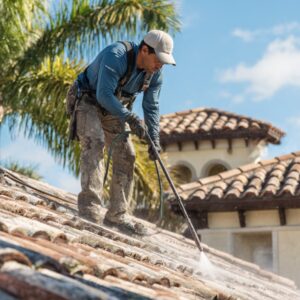
Instead of high-pressure washing, professionals use controlled, low-pressure rinsing to remove residue while preserving the integrity of the tiles.
Step 3: Careful Foot Placement
Walking on tile roofs requires experience. Improper weight distribution can crack tiles instantly. Professionals know how to step safely and minimize stress on the roof structure.
Step 4: Post-Cleaning Inspection
Once cleaning is complete, the roof should be inspected for cracked tiles, displaced sections, or underlying issues that were hidden by algae growth.
How Tile Roof Cleaning Differs From Shingle Roofs
Homeowners often hear about mold-resistant shingles, which are designed to reduce algae growth on asphalt roofing. While architectural asphalt shingles may resist staining better than older materials, tile roofs rely on proper cleaning, not coatings or surface treatments, to maintain performance.
This distinction matters:
- Tile roofs cannot be treated the same way as shingles
- Products designed for shingles may damage tile
- Cleaning frequency and techniques differ
That’s why it’s important to work with professionals who understand material-specific care.
How Often Should Tile Roofs Be Cleaned in Southwest Florida?
There’s no one-size-fits-all schedule, but most tile roofs in Southwest Florida benefit from professional cleaning every 1–3 years, depending on:
- Tree coverage and shade
- Roof orientation
- Local moisture levels
- Previous algae or mildew severity
Regular inspections help determine the right timing and prevent buildup from becoming difficult, or damaging, to remove.
Preventing Future Algae and Mildew Growth
While no roof is completely immune, certain steps can help slow regrowth:
- Trim back overhanging branches to reduce shade
- Ensure proper roof drainage
- Address cracked or damaged tiles promptly
- Schedule routine professional inspections
Prevention is always more cost-effective than allowing buildup to worsen over time.
When Cleaning Isn’t Enough
In some cases, algae and mildew growth expose underlying roofing issues rather than causing them. Cracked tiles, compromised underlayment, or age-related wear may require repairs or partial replacement instead of repeated cleanings.
At Bedrock Roofing, we help homeowners determine whether cleaning, repair, or replacement is the most practical long-term solution, based on the condition of the roof, not guesswork.
Protecting Your Tile Roof the Right Way
Tile roofs are a major investment and one of the most visually striking roofing options in Southwest Florida. Keeping them free of algae and mildew requires the right balance of cleaning expertise and material knowledge.
Whether you’re dealing with visible mildew on roof tiles, dark streaks, or early signs of organic growth, professional care helps preserve both appearance and performance, without unnecessary damage.
For safe, effective roof inspections, repairs, and tile roofing solutions, Bedrock Roofing offers experienced guidance and free estimates to help you protect your home year after year.